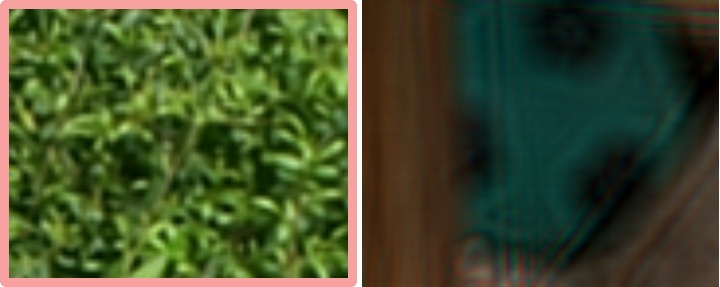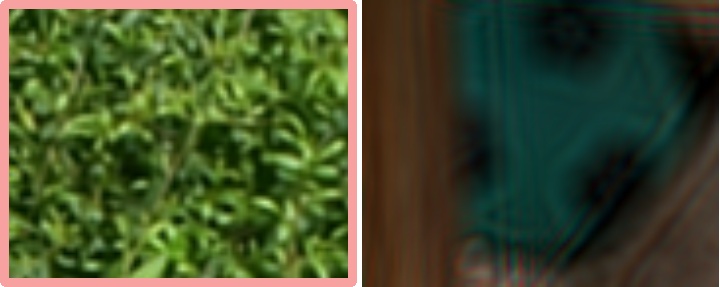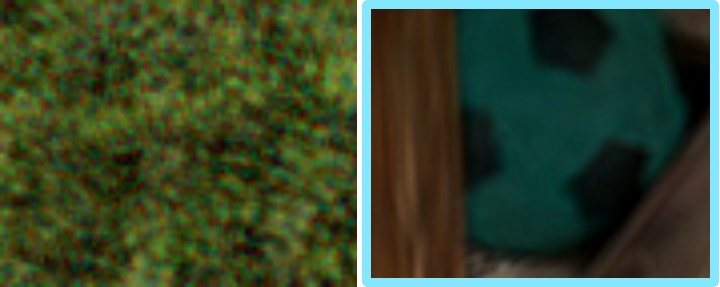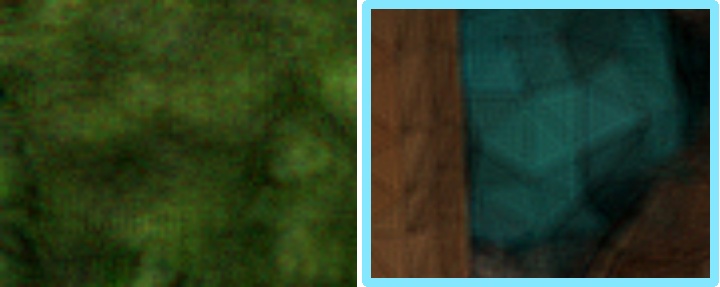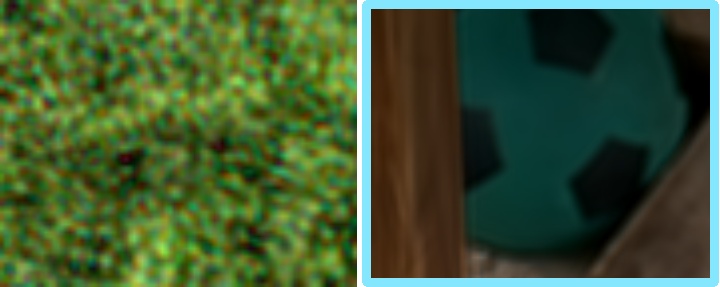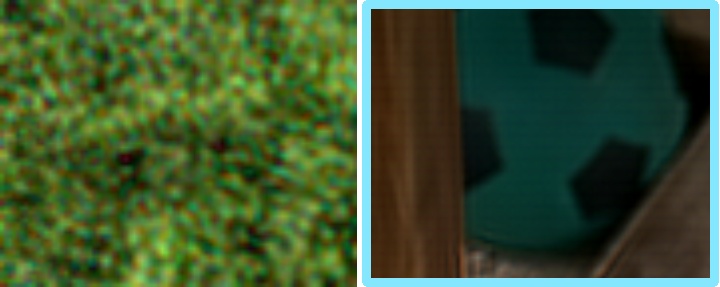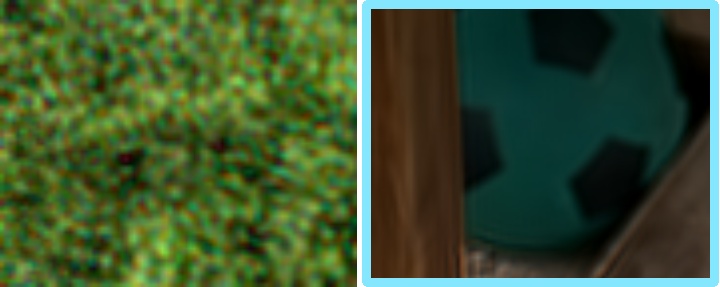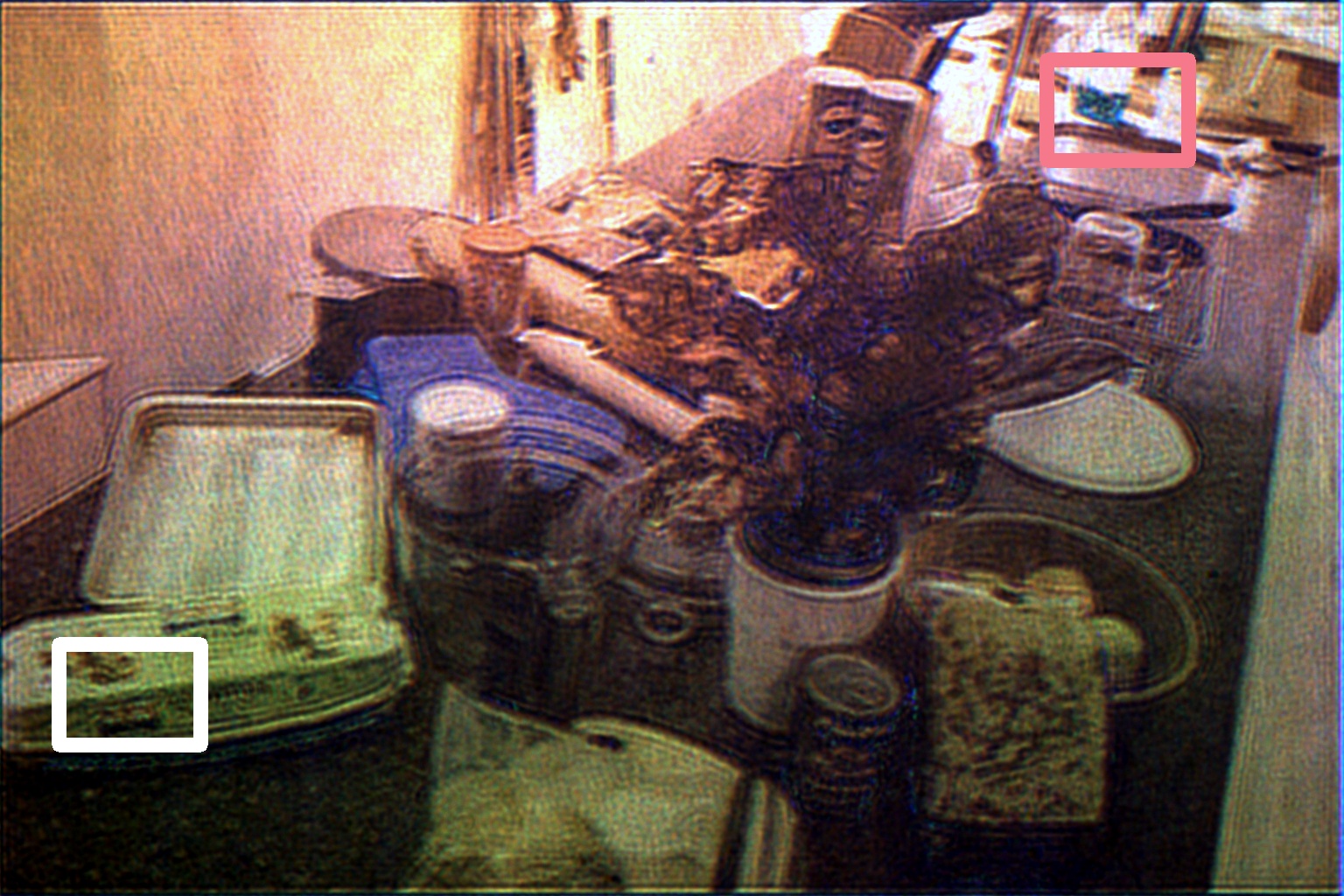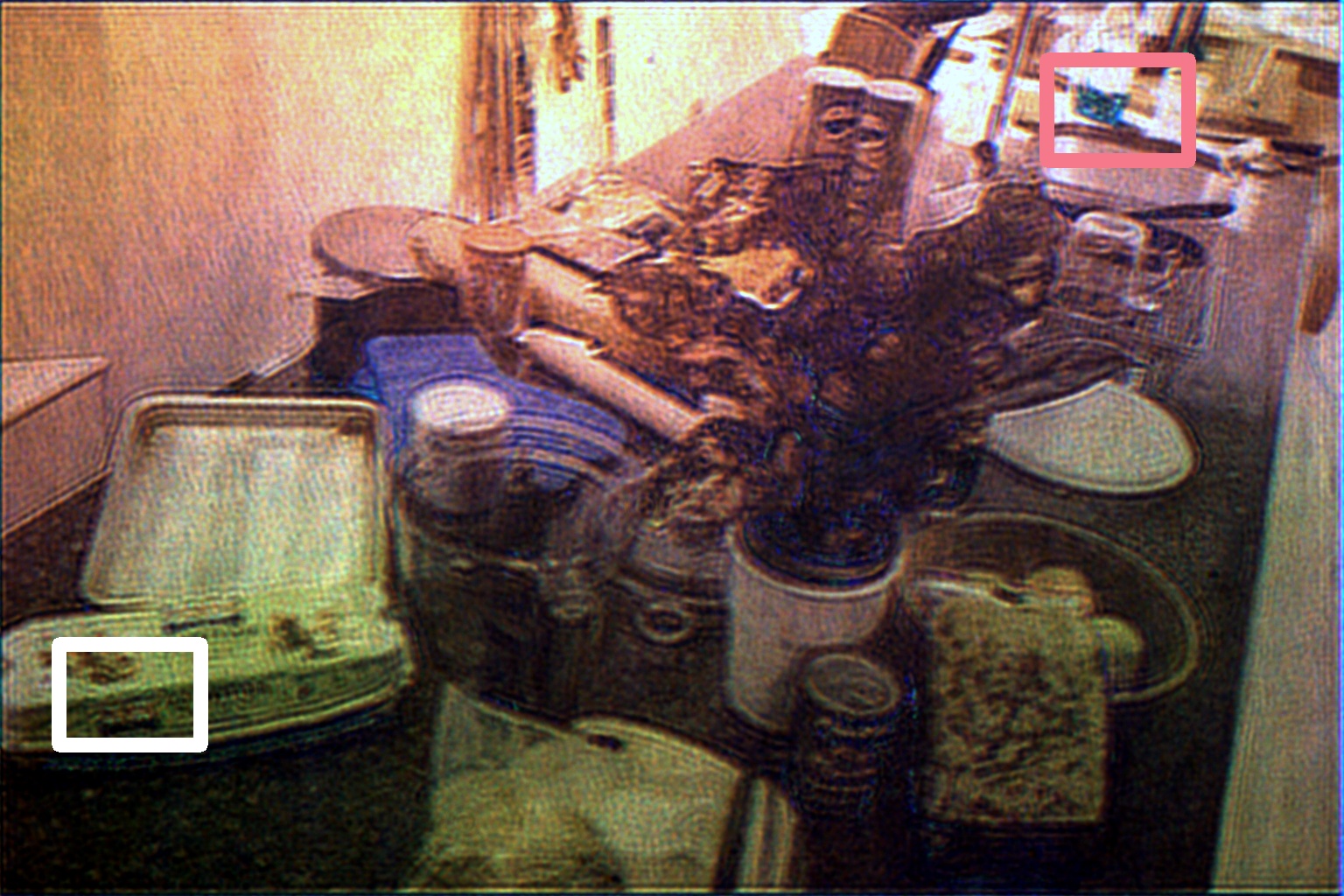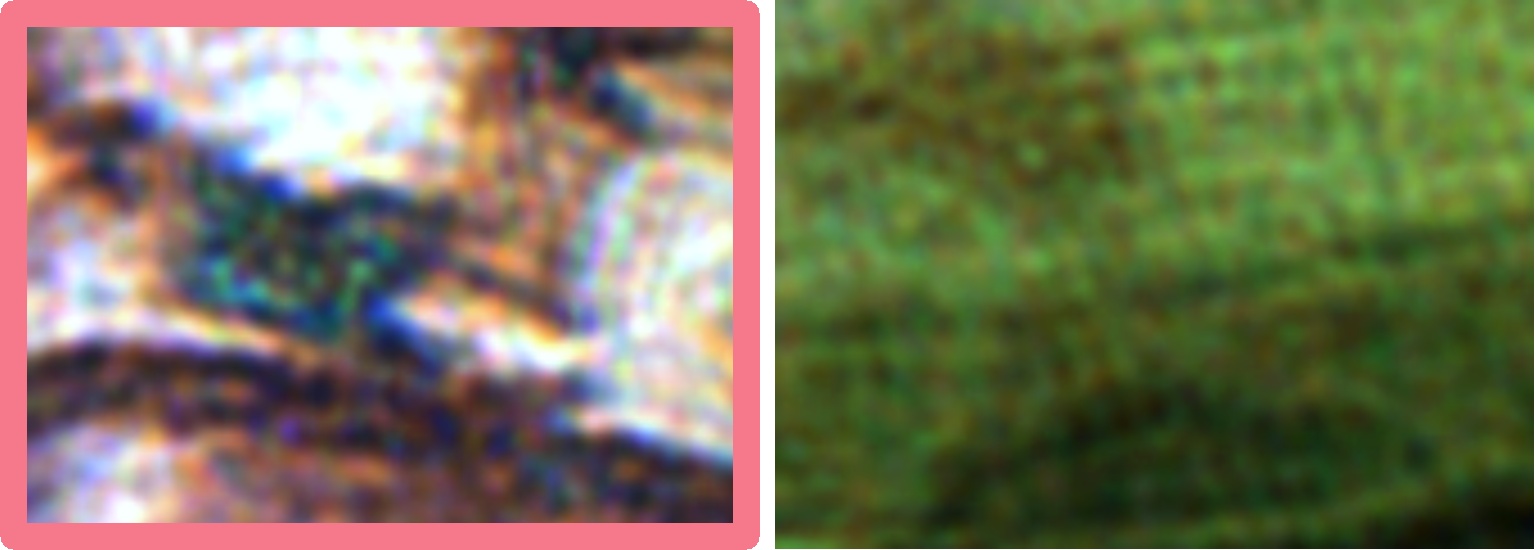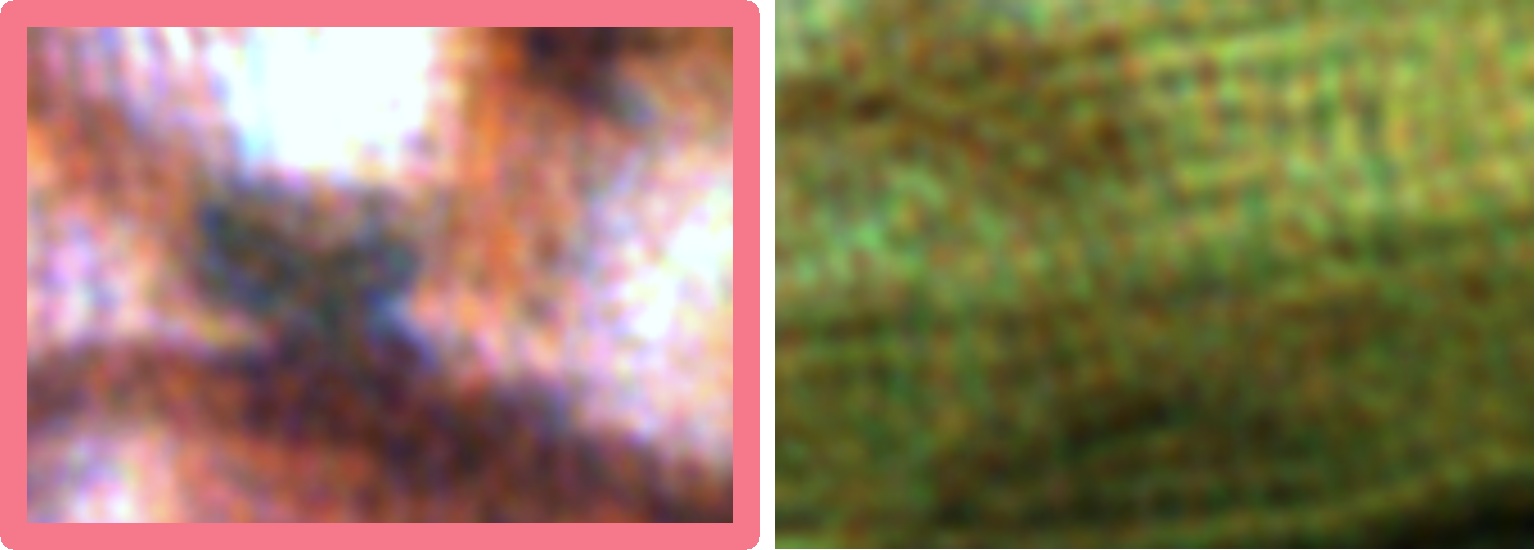
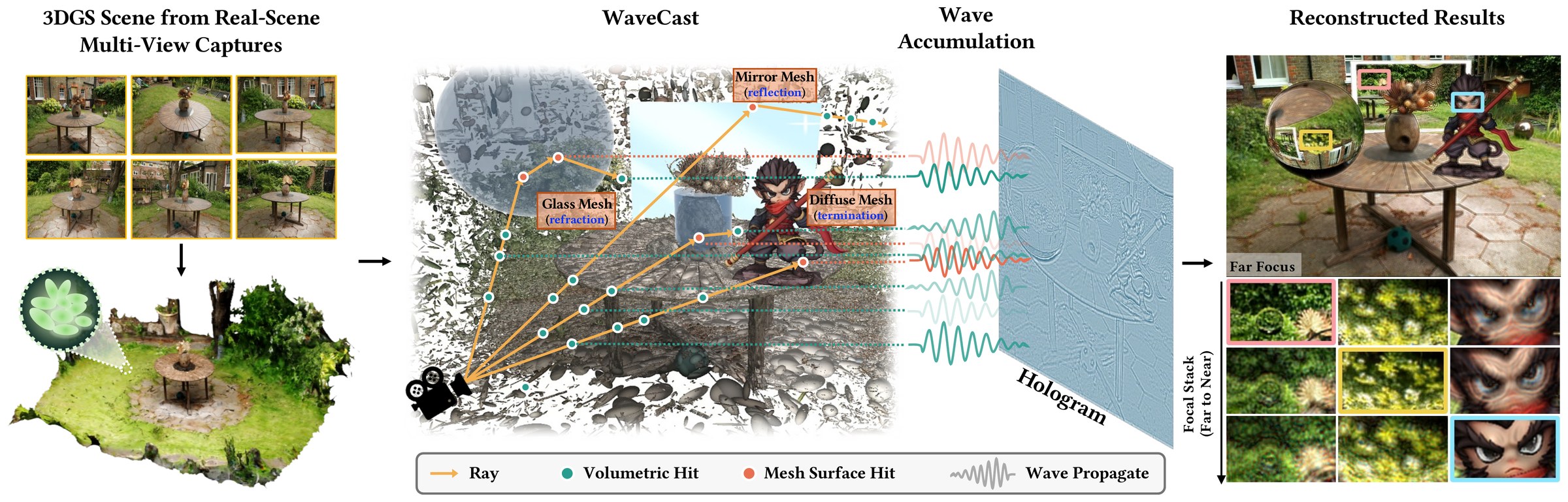
Given a hybrid scene composed of a real-world 3DGS reconstruction and inserted mesh-based virtual assets, WaveCast synthesizes holograms through a coupled ray–wave process. Scene-level ray traversal identifies path interactions with volumetric primitives and mesh surfaces and accumulates them as localized subhologram contributions on the SLM plane. The resulting reconstructions show refocusable mixed-reality content with scene-dependent occlusion, reflection, and refraction.
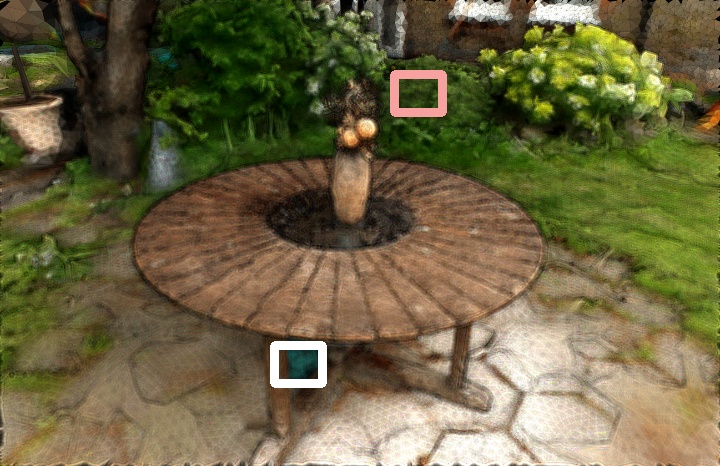
Computer-generated holography (CGH) seeks to synthesize a complex wavefront on a spatial light modulator (SLM) whose free-space propagation reconstructs a target 3D scene. Existing CGH pipelines are tightly coupled to specific scene representations and provide limited support for geometry-aware light transport effects across complex 3D scenes. We introduce WaveCast, a unified ray–wave framework for hologram generation across heterogeneous volumetric and surface-based primitives, including 3D Gaussians and triangle meshes. At the core of WaveCast is wave casting, a ray-based process that traverses mixed geometry while accumulating transport-aware wave contributions associated with visibility, transmittance, reflection and refraction. These light–scene interactions are then converted into localized subhologram contributions that are coherently accumulated on the SLM. To enable scalable hologram synthesis, we develop a custom CUDA kernel for tiled gather-style subhologram accumulation, achieving interactive performance. Experiments on real and hybrid scenes demonstrate that, to the best of our knowledge, WaveCast is the first holographic rendering pipeline supporting hybrid real–virtual scenes and path-dependent optical effects. Our work establishes a foundation for scalable, geometry-aware holographic rendering where volumetric and surface-based scene representations can be jointly traversed and synthesized into coherent holograms.
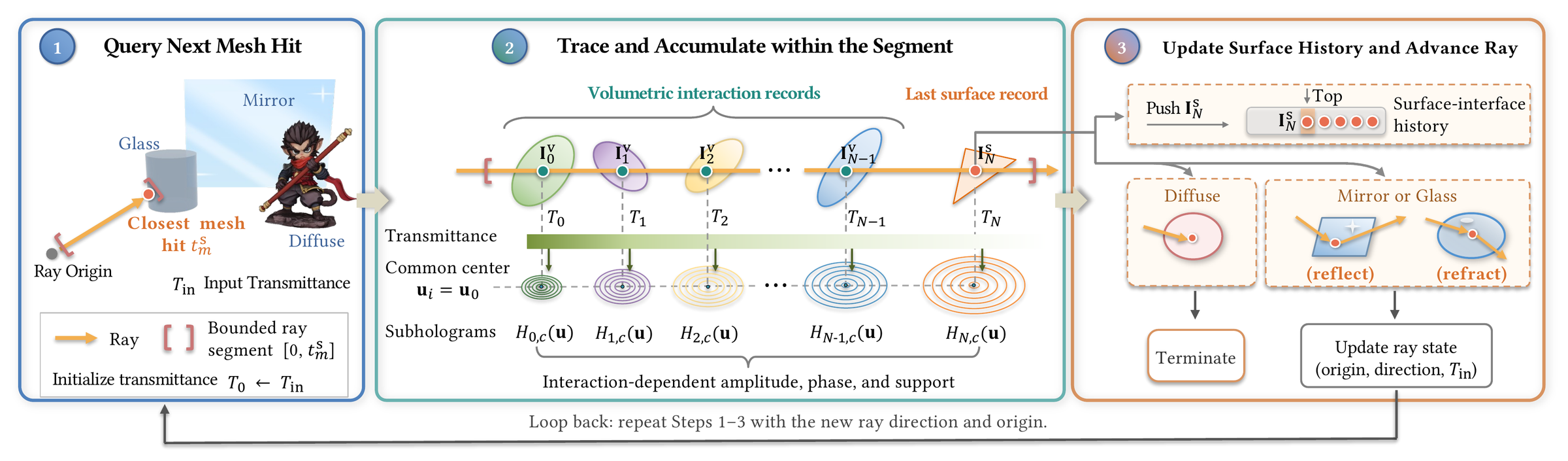
WaveCast first traces light transport through a hybrid scene, then turns every path interaction into a coherent wave contribution. This separation preserves visibility, reflection, refraction, and depth-dependent focus all the way to the final hologram.
Each ray alternates between bounded volumetric segments and mesh-surface events. Gaussian interactions are accumulated in depth order; diffuse surfaces terminate the path, while mirrors and refractive interfaces launch the next segment.
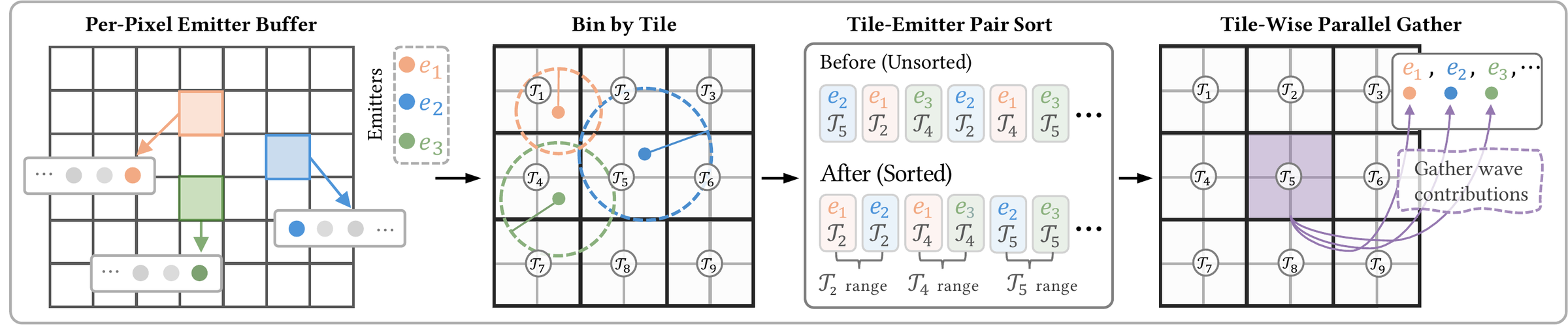
Each volumetric or surface interaction contributes a localized, path-dependent subhologram. Because these footprints overlap heavily on the SLM, direct scatter accumulation incurs severe atomic-write contention. WaveCast bins contributions by tile so each CUDA block gathers only the subholograms that overlap its assigned region.
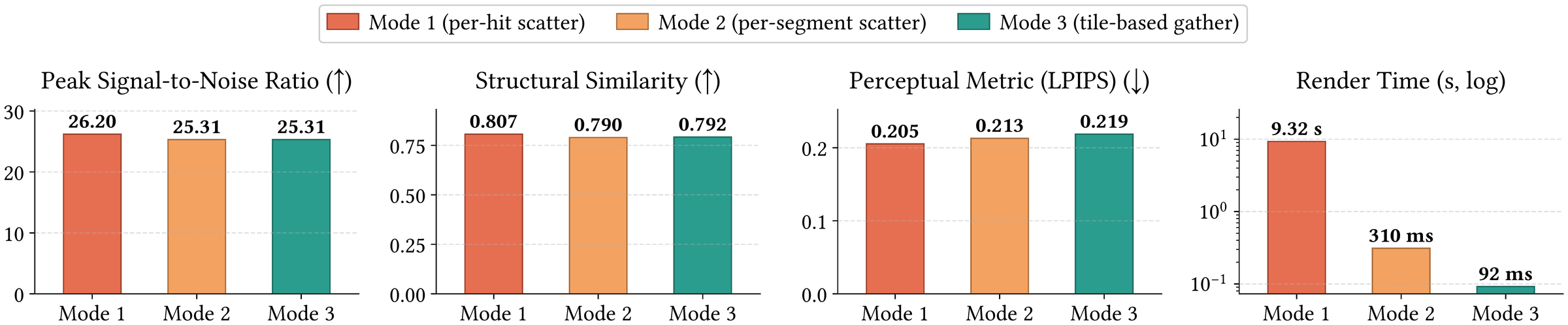
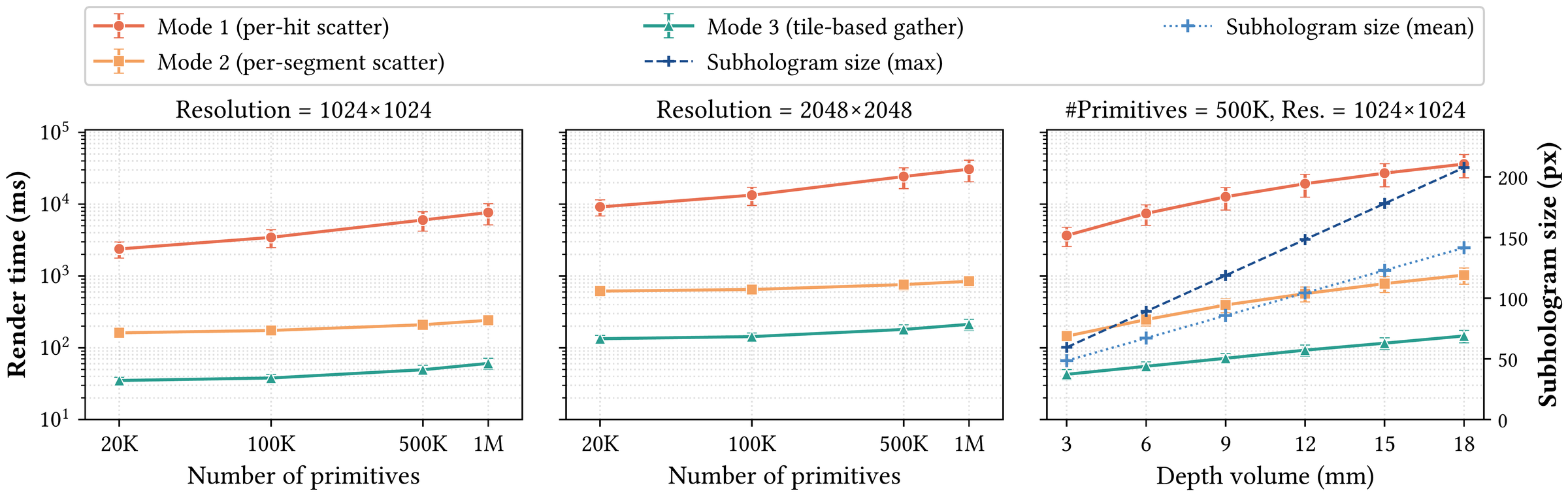
WaveCast exposes three execution modes that progressively consolidate wave contributions and replace scatter writes with tiled gather. All three produce closely matching reconstructions, while the optimized formulation reduces synthesis time by orders of magnitude.
With no per-scene optimization, WaveCast turns a reconstructed 3DGS scene into an immediately editable holographic canvas.
Compose hybrid scenesInsert mesh-based virtual objects into captured 3DGS scenes.
Edit object attributesAdjust object transforms and supported optical attributes at runtime.
Switch viewpointsExplore the scene interactively while updating the hologram and reconstruction preview.
Edit virtual objects, switch viewpoints, and change reconstruction depth while the hologram updates interactively.
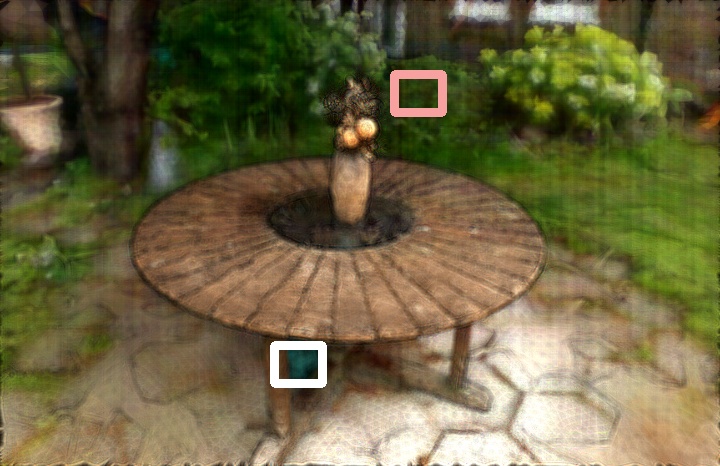
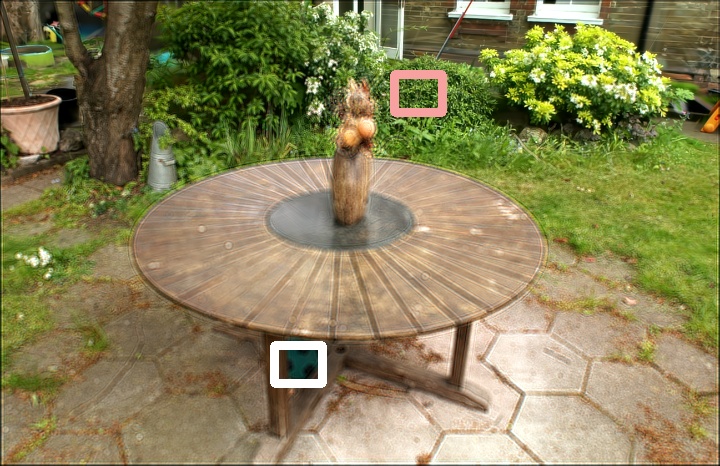
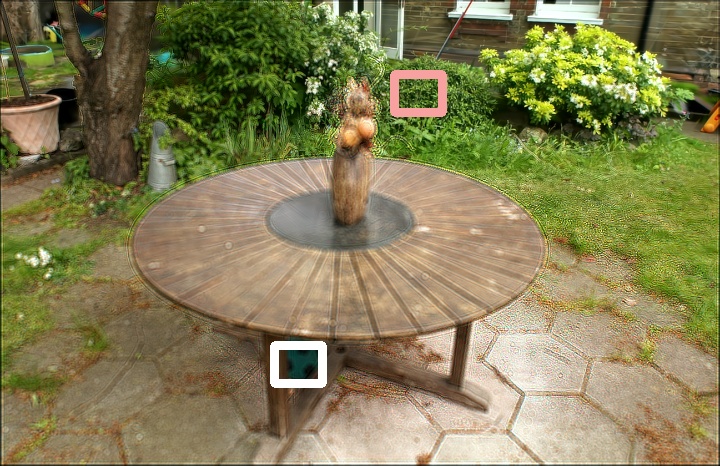
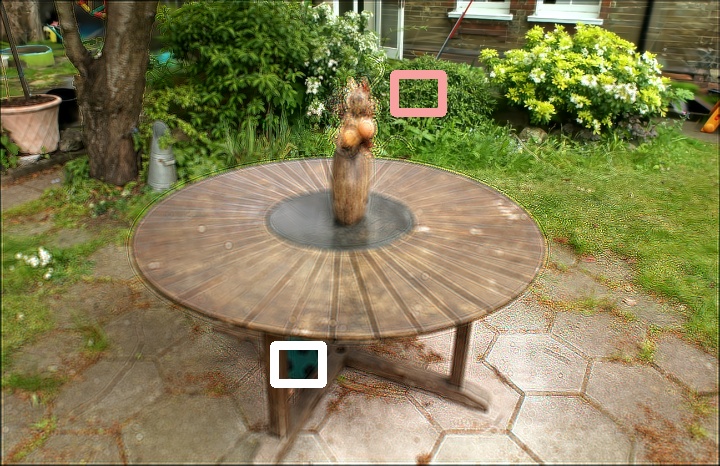
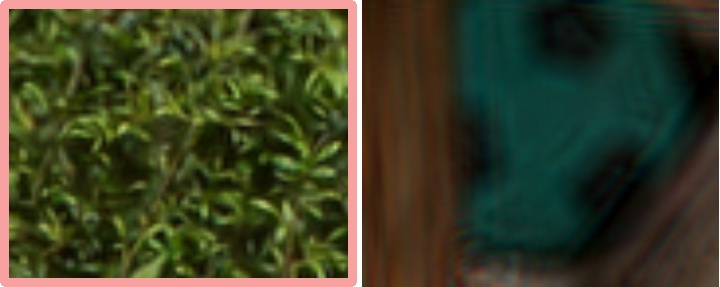
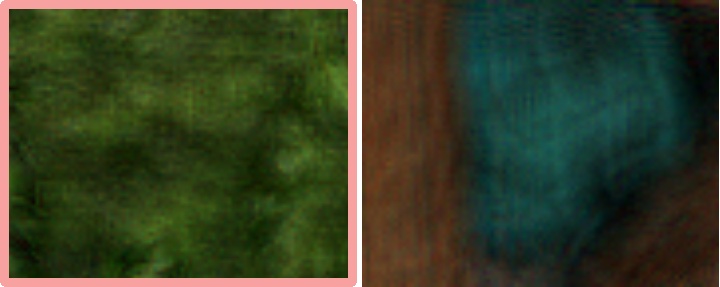
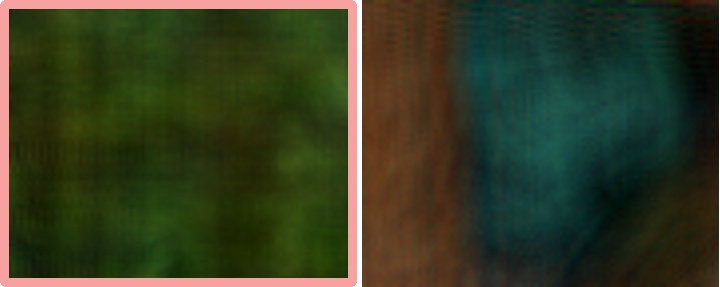
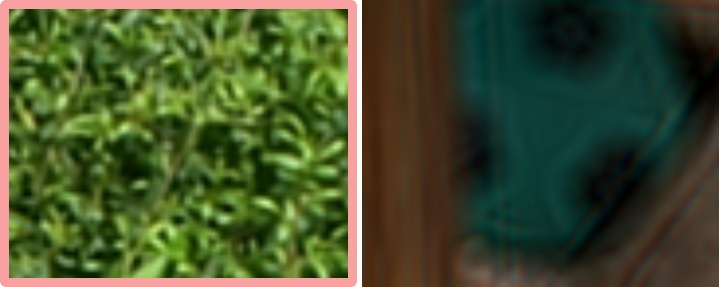
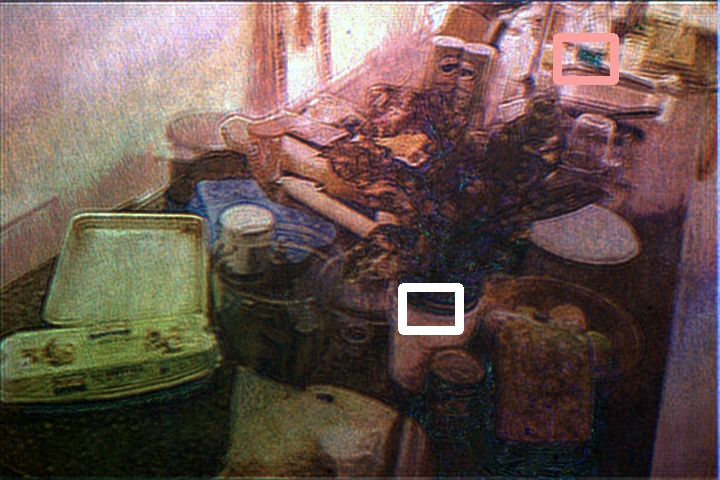
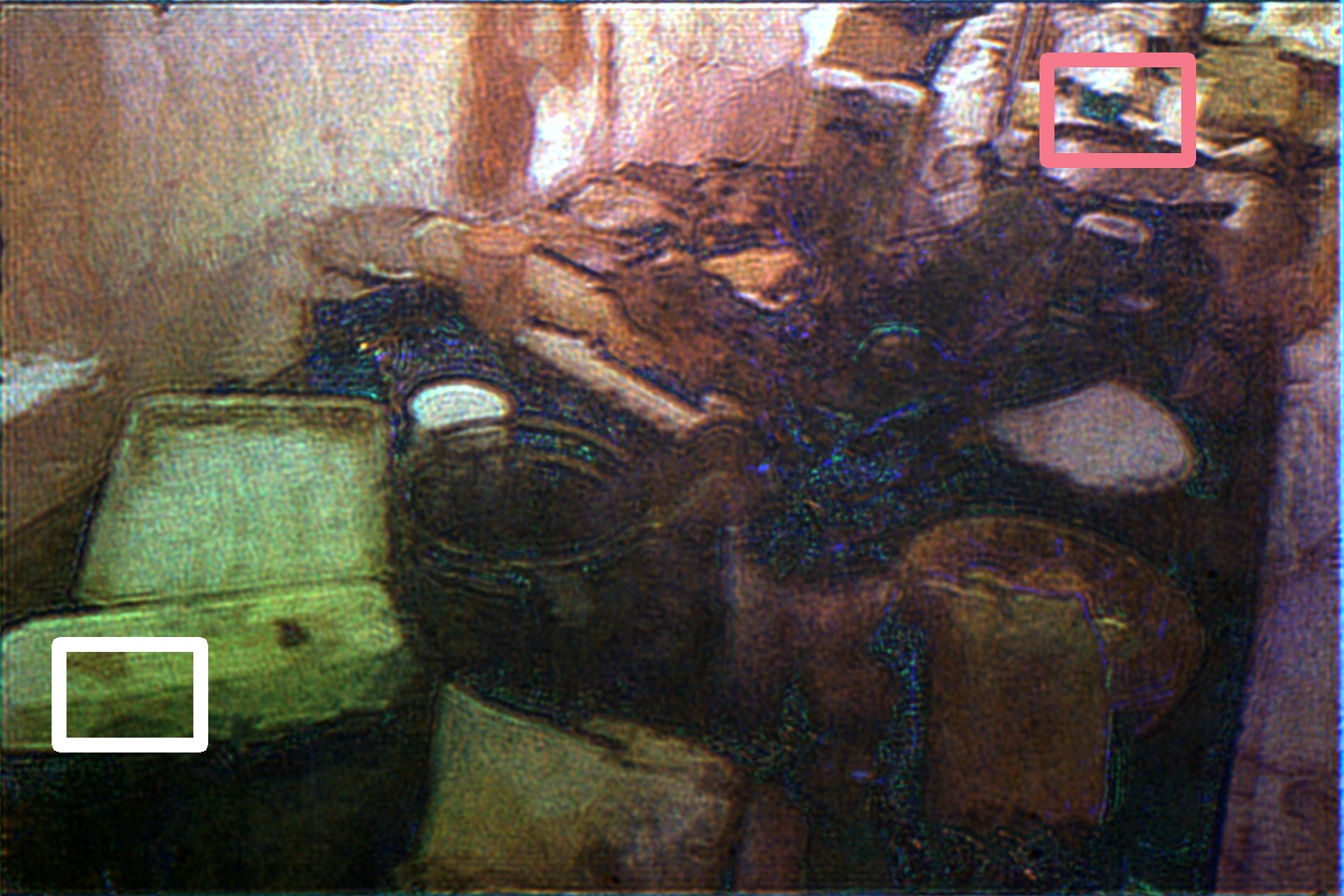
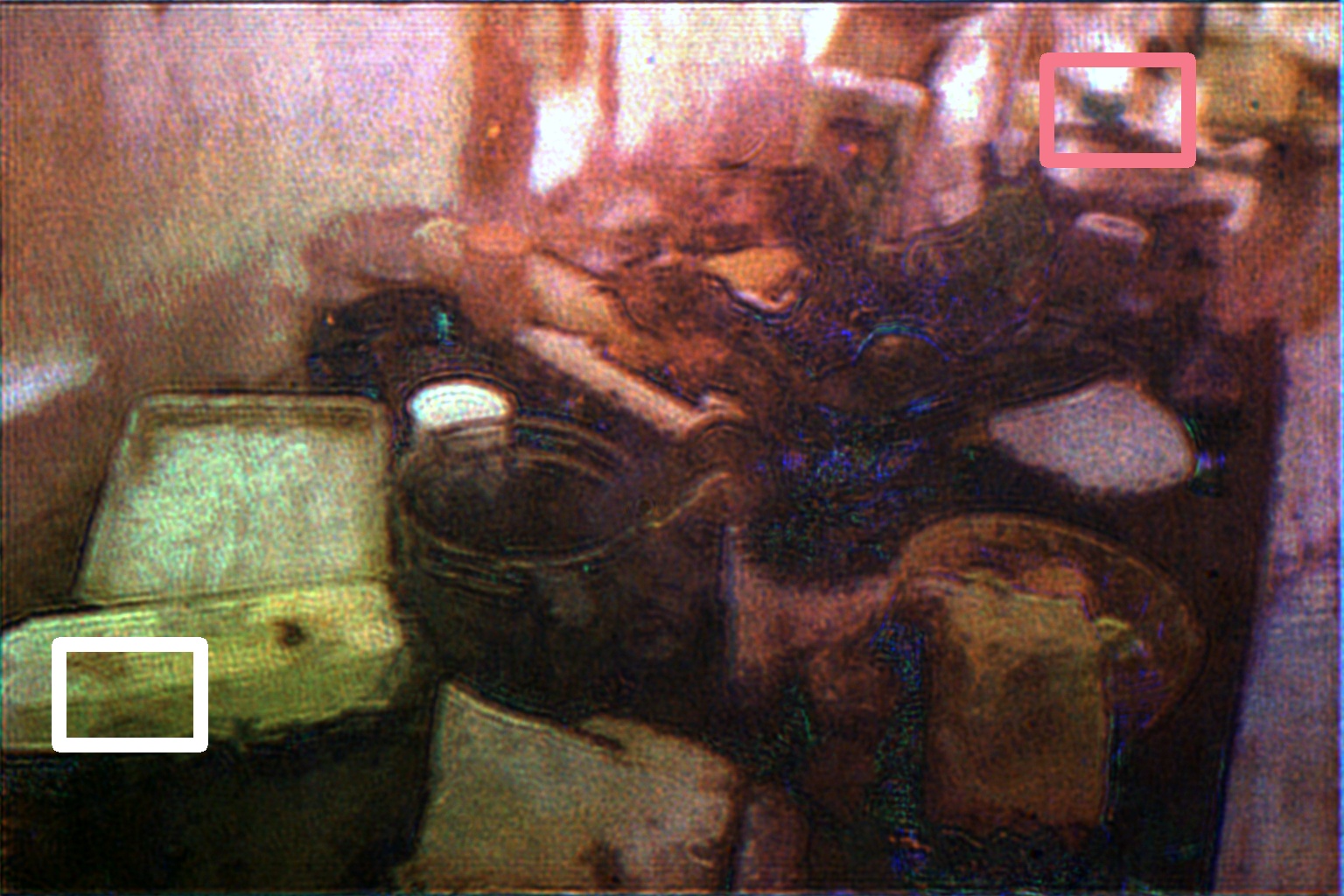
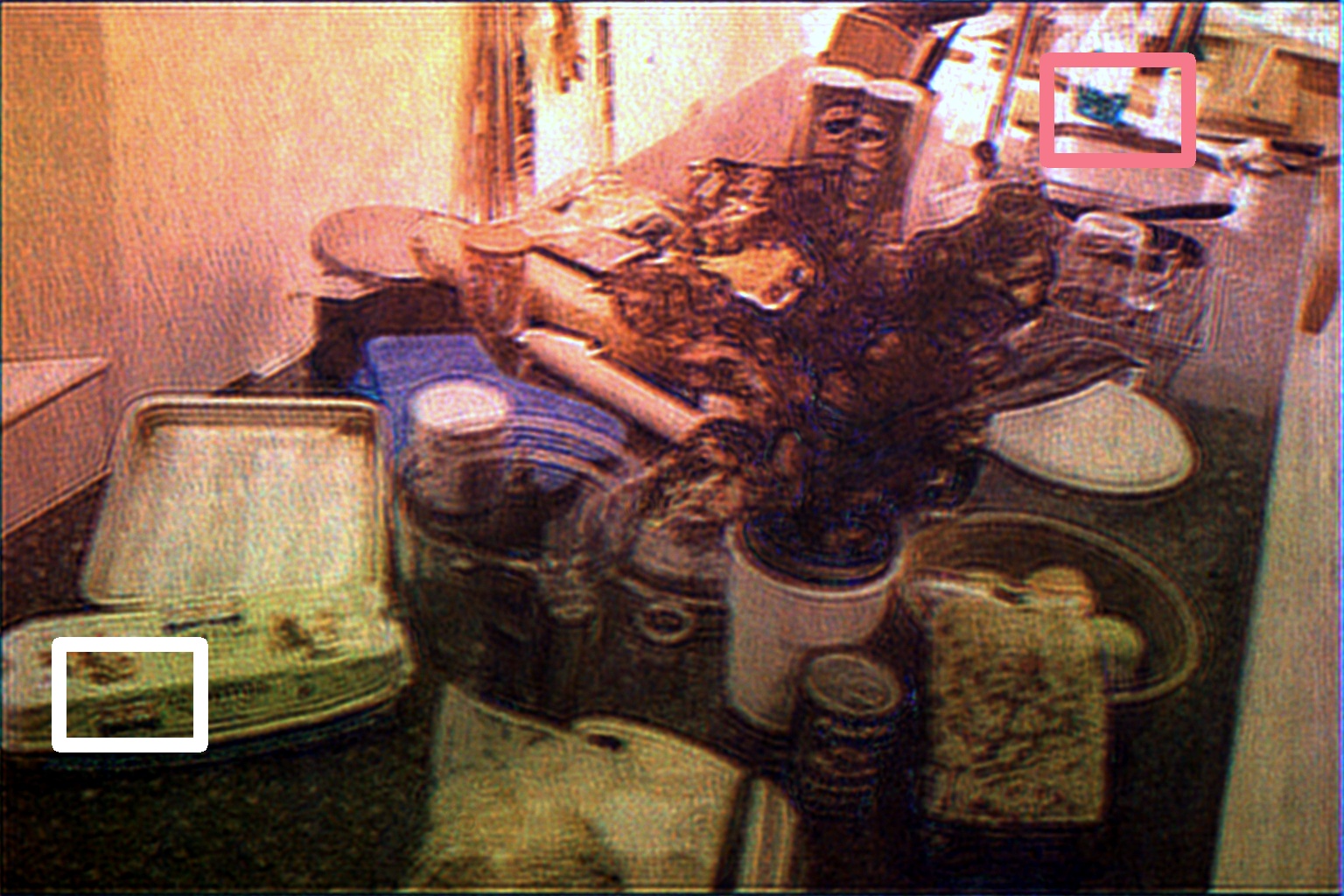
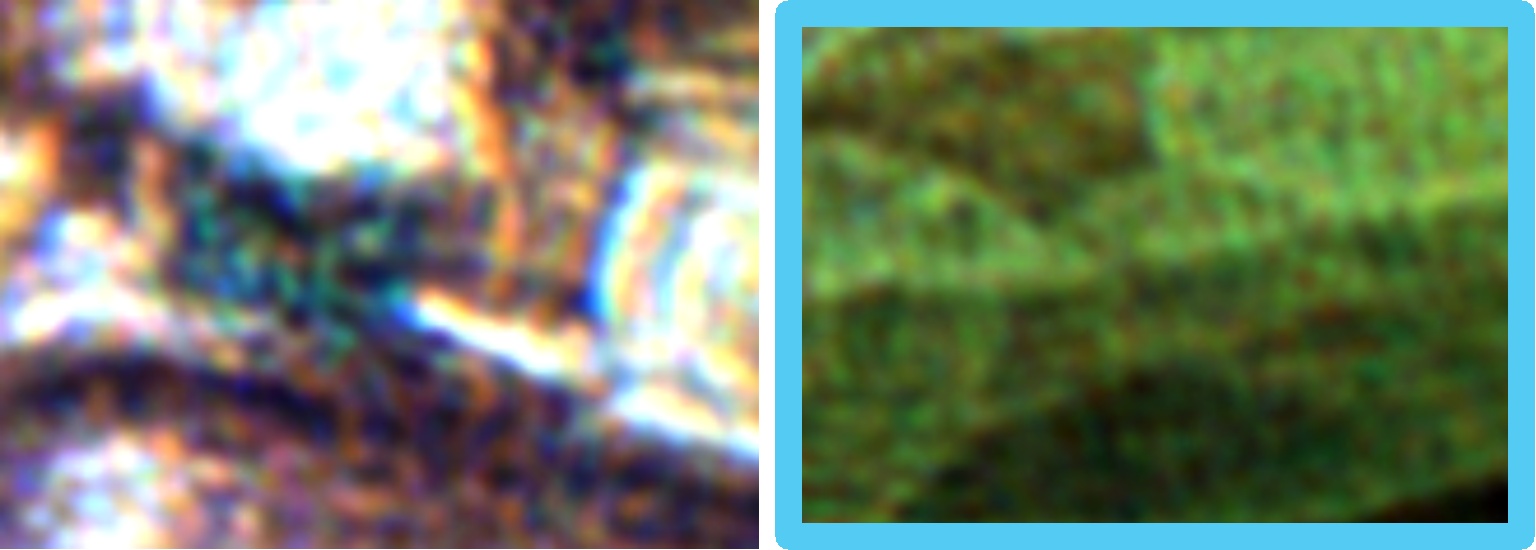
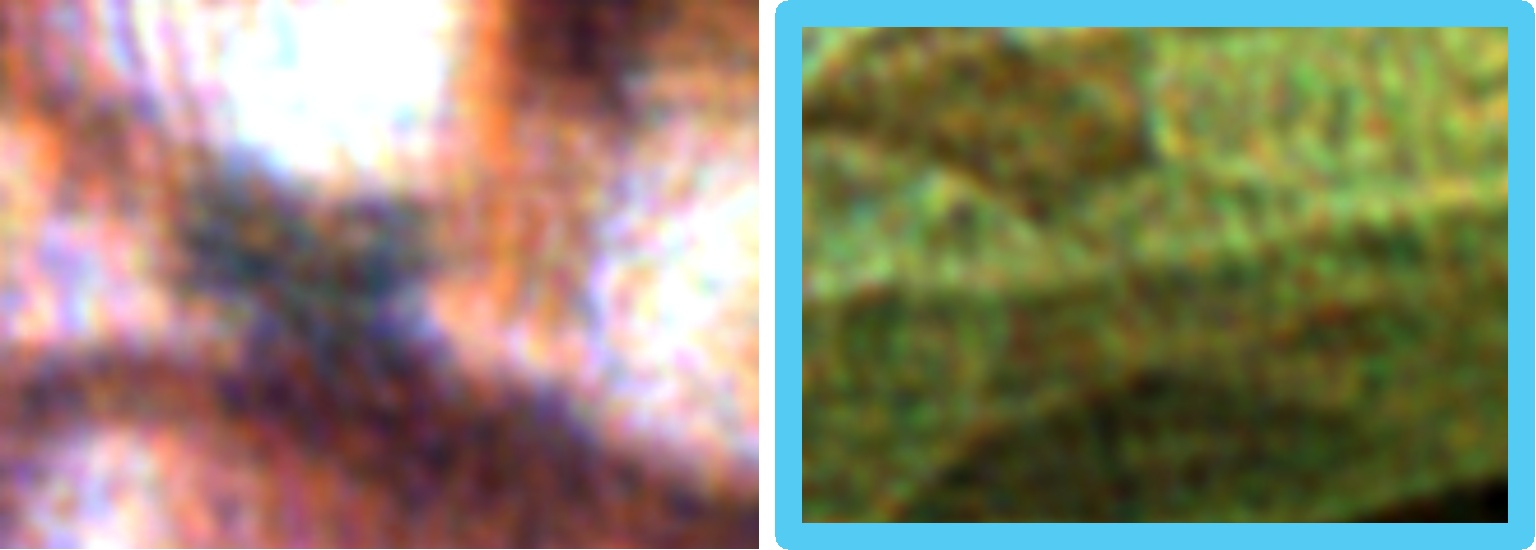
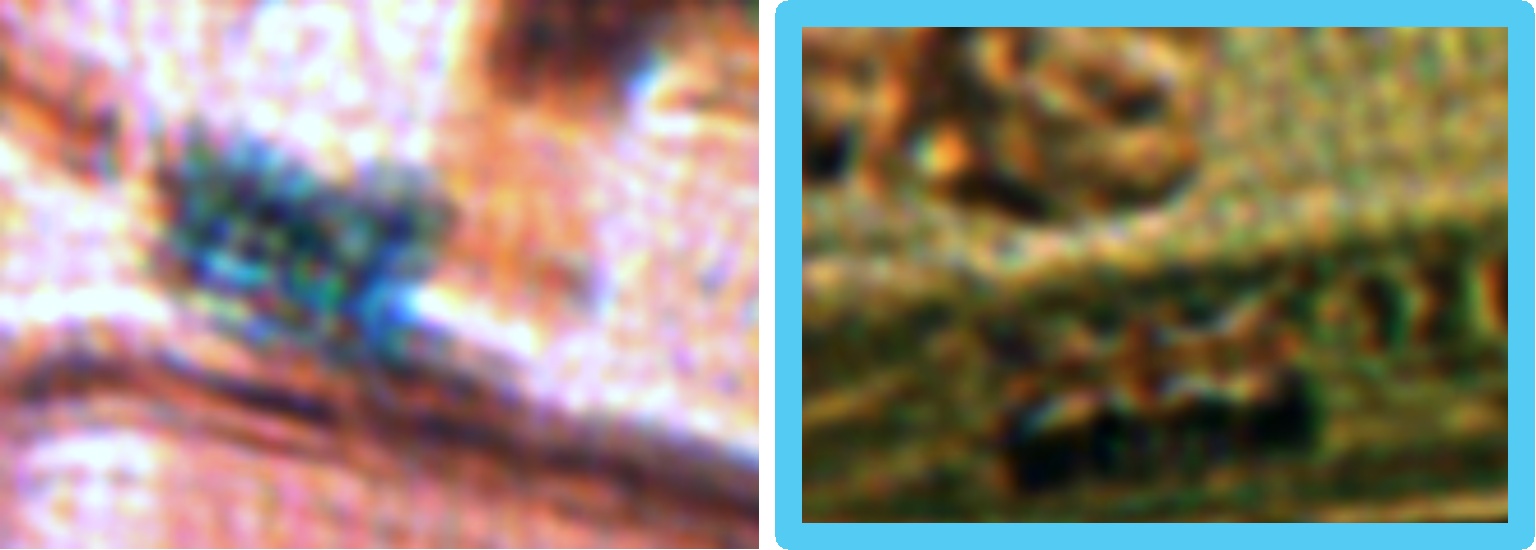
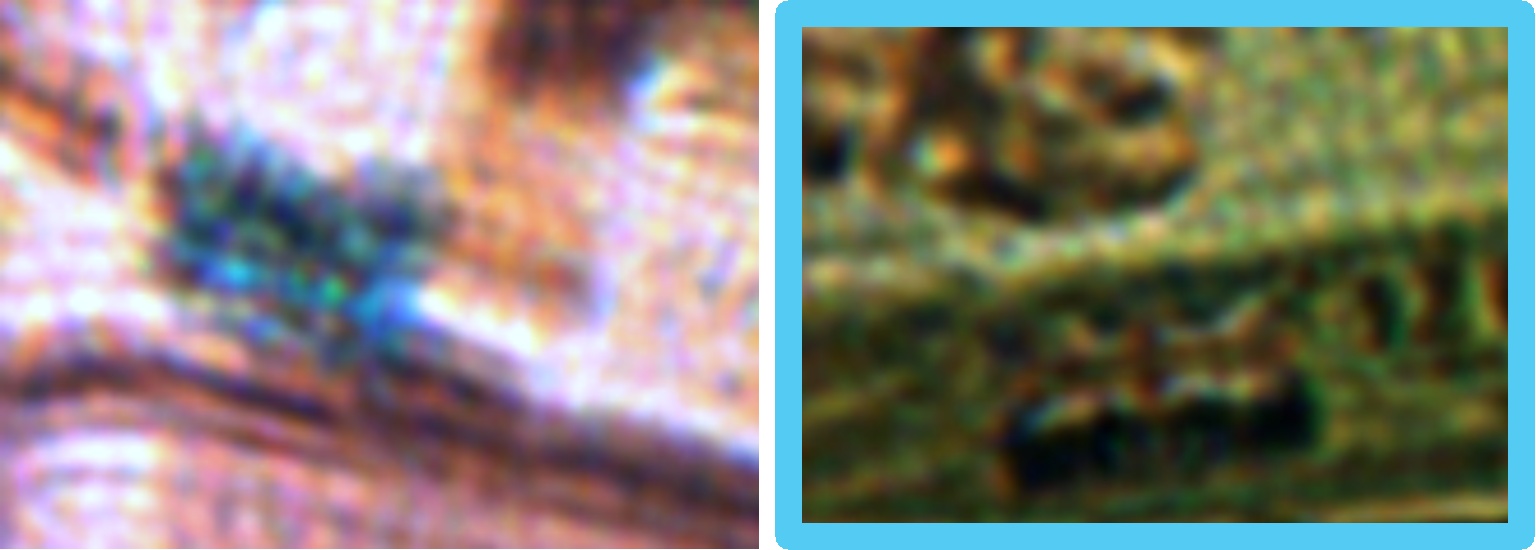
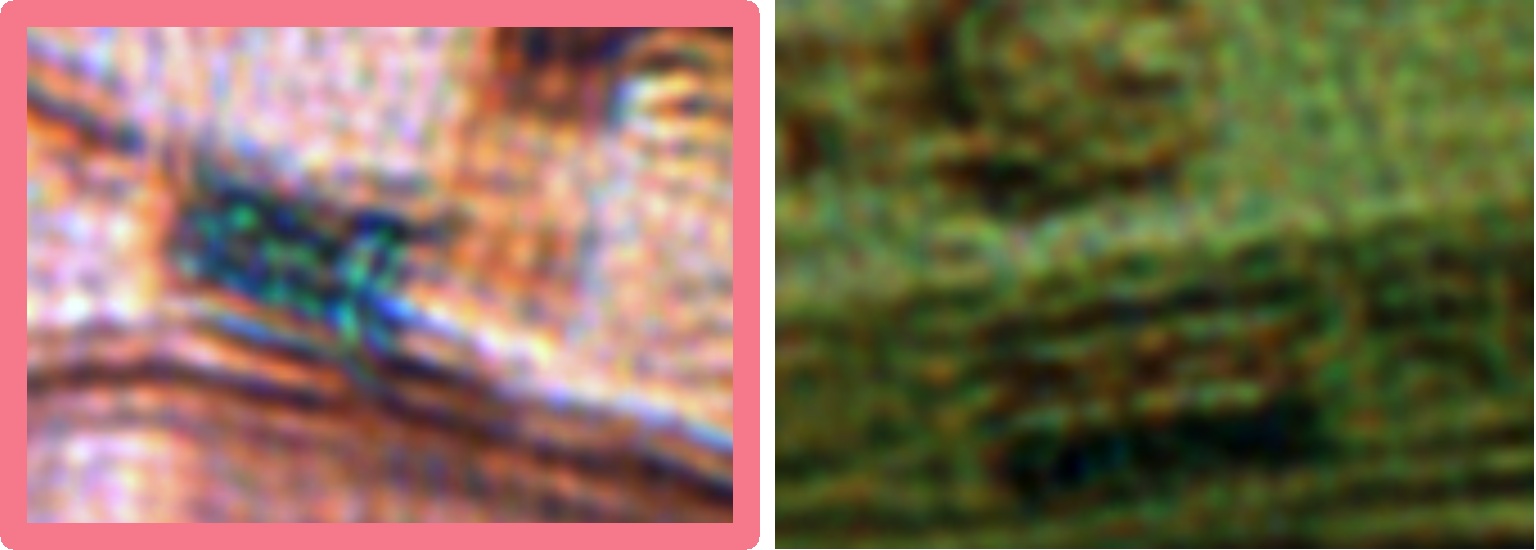
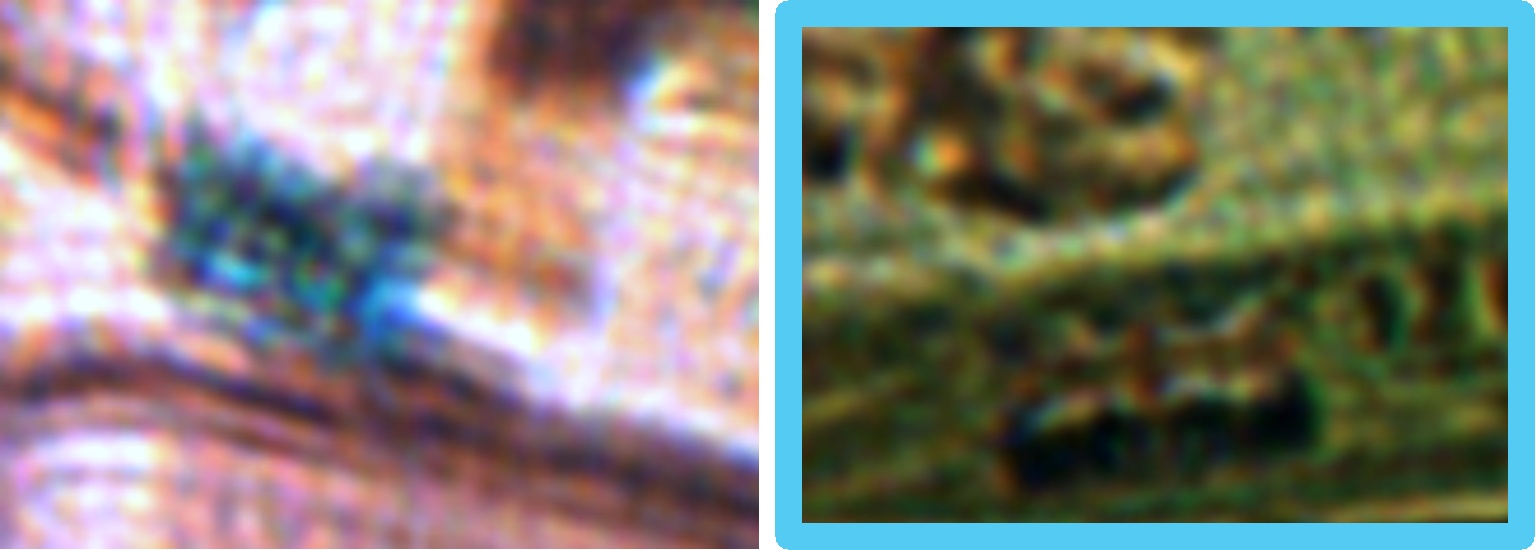
We compare against GWS (holograms from 2D Gaussian primitives), Mesh AWB (analytical wave-based synthesis on triangle meshes) and Mesh Silhouette (mesh synthesis with silhouette-based occlusion handling), under a matched per-scene primitive budget. For each example we show a focal reconstruction and zoom-in regions at a far and a near focus setting.


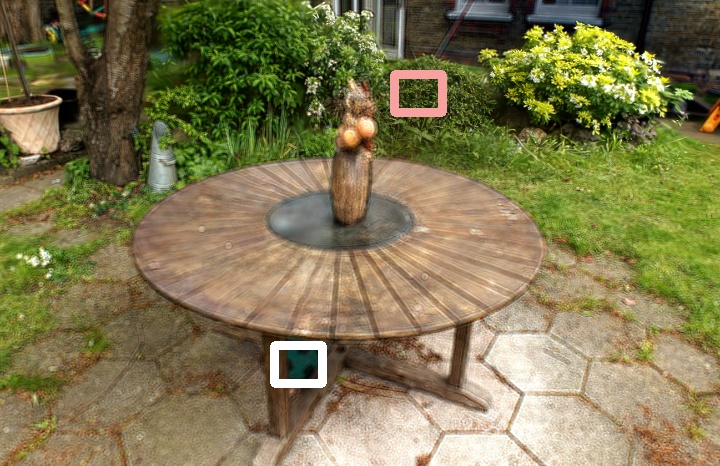
Both GWS and our method produce photorealistic reconstructions, benefiting from their Gaussian volumetric representations, while the mesh-based baselines lose texture fidelity and fine structure — visible here in the foliage detail and local edge structure.


On the physical display, our method reproduces near/far focus transitions and high-frequency detail reliably, while the mesh-based baselines lose more structure.
The three execution modes preserve comparable reconstruction quality while progressively reducing hologram synthesis time.
@inproceedings{wang2026wavecast,
author = {Wang, Yujie and Peng, Xi and Chakravarthula, Praneeth},
title = {Wave Casting for Hybrid-Scene Interactive Holography},
booktitle = {SIGGRAPH Asia 2026 Conference Papers (SA Conference Papers '26)},
year = {2026},
location = {Kuala Lumpur, Malaysia},
publisher = {Association for Computing Machinery},
doi = {10.1145/3829340.3842287},
isbn = {979-8-4007-2842-6/2026/12}
}